The Art of Celebration: Balloon Architecture and Experiential Event Design
Exploring how architecture, balloon artistry and event planning transform ordinary spaces into extraordinary experiences.
Every memorable celebration begins with an idea. Sometimes, it starts with a simple sketch, a collection of colors, a curved line on paper, or an imagined space that doesn't exist yet.
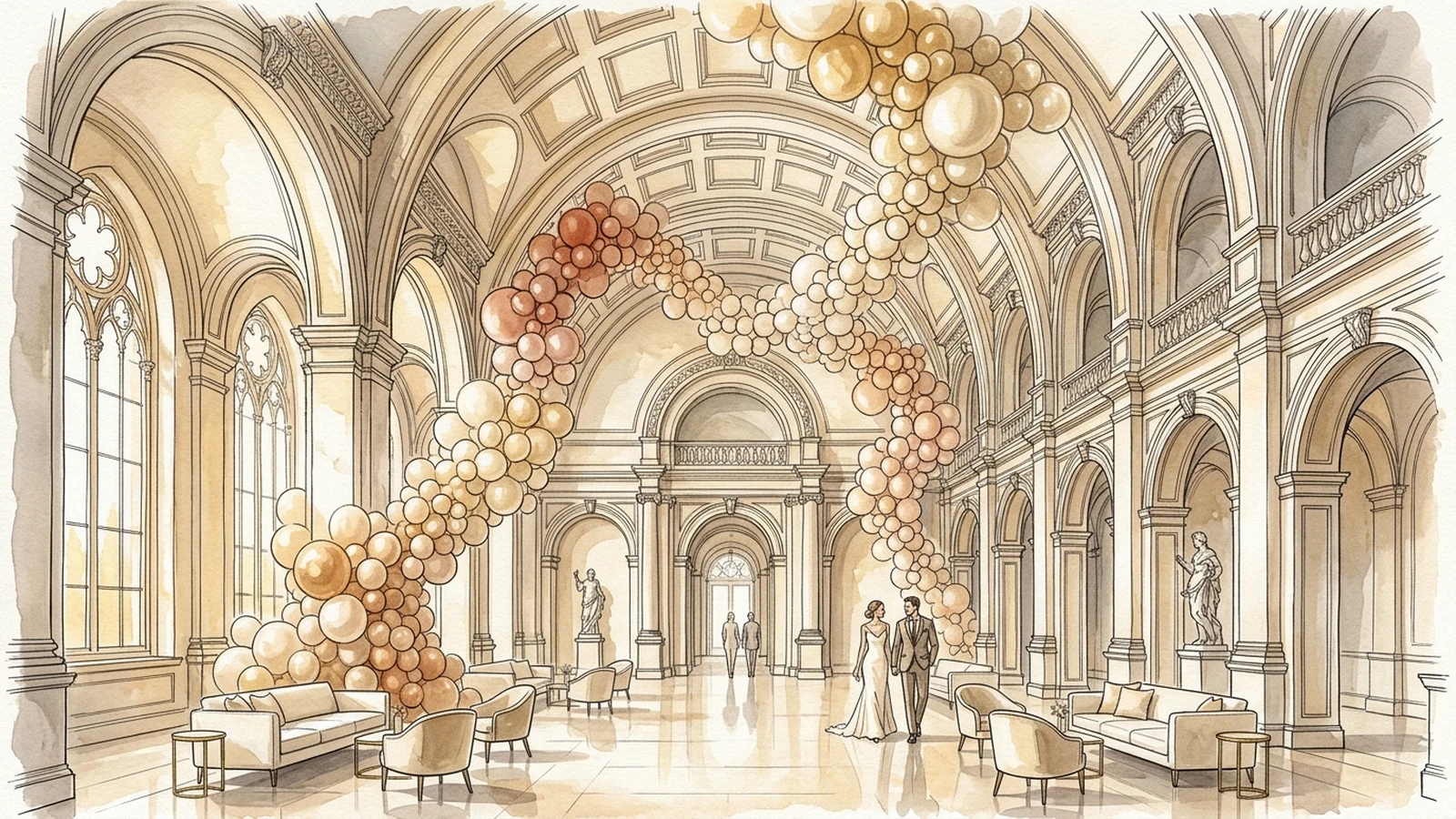
The illustration accompanying this article represents how I see event design. It brings together architectural lines, organic balloon forms, warm colors and an imagined gathering space.
Each element has its own purpose, yet together they tell a single story. To me, that is the art of celebration.
Experiential event design brings together spatial design, artistic expression and event planning to create environments that influence how people experience and remember a celebration. At The LA Events, we explore this approach through balloon architecture, sculptural installations and bespoke event experiences across Los Angeles.
Key Takeaways
- Architecture gives event design structure, proportion and spatial balance.
- Balloon artistry introduces organic movement, color and sculptural expression.
- Experiential event design considers how guests interact with a space, rather than simply how it looks.
- Thoughtful design can transform weddings, corporate events, brand activations and private celebrations without unnecessary visual complexity.
What Is Experiential Event Design?
Experiential event design is the practice of creating environments that encourage emotional, visual and physical engagement with an event. It combines spatial planning, lighting, artistic installations, materials and guest experience to create a cohesive atmosphere.
Traditional decoration often focuses on individual visual elements. Experiential design considers how those elements work together and how people experience the space as a whole.
A beautifully decorated room can be impressive. But a thoughtfully designed environment can change how someone feels from the moment they enter. That distinction is central to my approach.
Architecture: Giving an Idea Its Structure
Architecture is not limited to buildings. It is also about understanding how people experience space. When designing an event, I think about proportion, movement, balance, height and perspective:
- Where will guests enter?
- What will naturally capture their attention?
- How will people move through the venue?
- How will different elements interact with the surrounding environment?
- What role will natural and artificial lighting play?
Even a temporary installation can change the way a space feels. A thoughtfully designed entrance can create anticipation. A sculptural centerpiece can encourage conversation. An overhead installation can make an ordinary room feel completely different.
The structure may disappear after the event, but the experience can remain in someone's memory for years.
What Is Balloon Architecture?
Balloon architecture is an artistic approach to balloon design that uses form, scale, proportion, color and structural composition to create three-dimensional installations that interact with their surrounding environment.
What fascinates me about balloons is their creative flexibility. A balloon is an incredibly simple object. Yet when combined with different shapes, sizes, colors and textures, it can become something remarkably expressive.
In the illustration, the balloons are not simply attached to an arch. They interact with its geometry, soften its architectural lines and introduce movement into the composition. There is a beautiful contrast between the precision of architecture and the organic nature of balloon design. One creates order. The other introduces freedom.
When these two approaches come together, balloons can become sculptural forms that feel elegant, sophisticated and intentional. We explore this relationship through our signature design discipline, Architecture of Air, at The LA Events.
How Does a Creative Concept Become an Event Experience?
Turning an artistic idea into a physical installation requires both creativity and practical planning.
1. Understanding the Venue
Every space has its own characteristics. Ceiling height, architectural features, natural light, entrances and existing materials influence what a design can become.
2. Developing the Visual Concept
The initial sketch establishes the relationship between color, geometry, materials, proportion and the intended atmosphere.
3. Designing the Installation
Balloon sizes, sculptural forms, supporting structures and placement need to work together while respecting venue requirements and practical limitations.
4. Considering the Guest Experience
The final design must allow people to enter, move, gather and interact comfortably within the environment. The objective is not simply to create an attractive installation. It is to create something that belongs in the space.
From Decoration to Experience: A Los Angeles Example
One example of this approach is The LA Events' installation for Feybl Coffee in Los Angeles. The composition brought together navy, champagne gold and transparent balloons, creating a sculptural installation for a brand gathering.
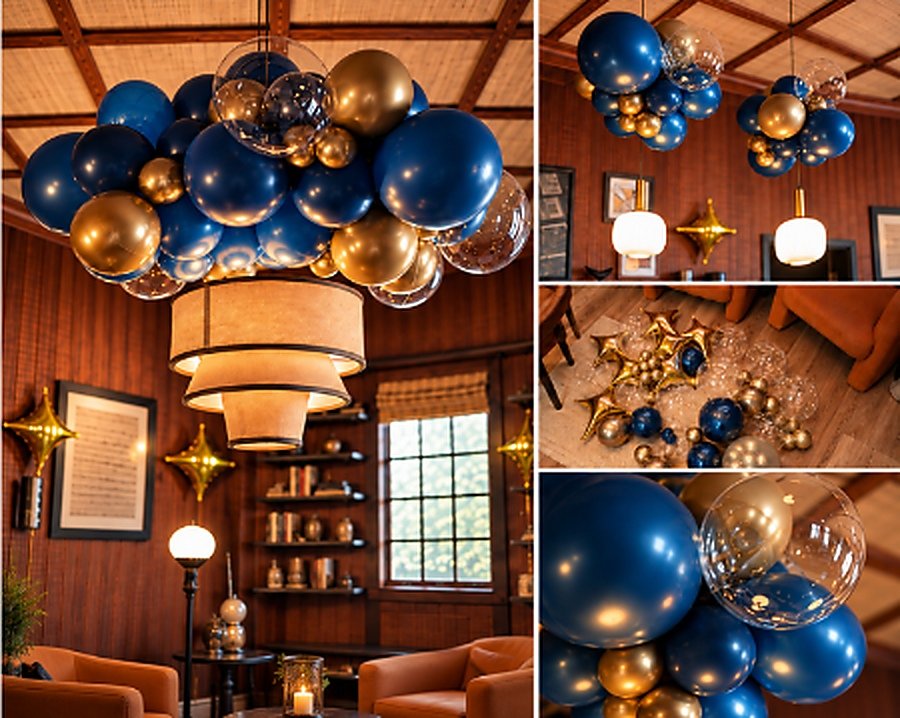
The project illustrates how a carefully selected palette and three-dimensional forms can complement a commercial environment while giving the occasion its own visual identity. For me, this is where balloon artistry becomes particularly interesting: when the installation responds to the identity of the business and the character of the surrounding space.
Event Planning: Designing for People
A beautiful installation alone does not make a successful event. Celebrations are ultimately about people, their relationships, their achievements and the moments they want to remember.
Event planning brings the creative vision into the real world. It connects the artistic concept with the venue, lighting, guest experience, timing and practical requirements. A design should not simply look beautiful in photographs. It should feel right when someone walks into the room. That human connection is what gives the design its meaning.
How Experiential Design Can Transform Different Events
The same principles of architecture, artistry and guest experience can be applied to different occasions, although each celebration requires its own approach.
Weddings
Experiential wedding design can reflect a couple's personality through meaningful colors, thoughtful ceremony installations and an atmosphere that feels personal to their story. Explore our approach to luxury wedding planning and design in Los Angeles.
Corporate Events and Brand Activations
Sculptural installations can translate a brand's visual identity into a physical environment through color, form, scale and carefully considered placement. Explore our experiential brand activations.
Private Celebrations
For birthdays, anniversaries and intimate gatherings, experiential design can transform a familiar space into something unexpected while preserving the personal nature of the occasion. Discover our bespoke private celebrations.
Looking Ahead to 2027: From Decoration to Experiential Design
As we look toward 2027, I believe there is an opportunity to rethink the role of decoration in the event industry. Rather than treating decorative elements as finishing touches, we can consider them part of the experience from the beginning.
I would like to see greater attention given to:
- Site-specific artistic installations
- Sculptural balloon compositions
- Personalized visual storytelling
- Thoughtful integration of lighting and architecture
- Design that prioritizes the guest experience
The objective is not always to create something bigger or more elaborate. Sometimes, the most powerful design is the one that communicates an idea with simplicity.
The Philosophy Behind The LA Events
At The LA Events, my ambition is to explore the space between architecture, artistic expression and celebration. I want to challenge the conventional perception of balloon decoration and explore what becomes possible when we approach it with the curiosity of an artist and the discipline of a designer.
There is something special about creating art that exists for only a few hours. Its temporary nature makes it meaningful. People gather, experience it, photograph it and eventually return to their everyday lives.
The installation disappears. The memory remains. And perhaps that is the most beautiful part of designing celebrations.
Frequently Asked Questions
What is the difference between event decoration and experiential event design?
Event decoration primarily focuses on the visual appearance of a venue. Experiential event design considers the entire environment, including spatial layout, lighting, artistic installations and how guests interact with the space.
How is balloon architecture different from traditional balloon decoration?
Balloon architecture uses sculptural composition, geometry, scale and structural design to create artistic installations that complement or transform their surrounding environment.
Are sculptural balloon installations suitable for luxury events?
Yes. Carefully considered colors, proportions, materials and placement can make sculptural balloon installations suitable for luxury weddings, corporate gatherings, brand activations and private celebrations.
Can experiential event design be adapted to smaller venues?
Yes. Experiential design is not dependent on the size of a venue. A smaller space can benefit from thoughtful focal points, balanced proportions and installations designed specifically for its layout.
Does The LA Events offer custom balloon installations in Los Angeles?
Yes. The LA Events specializes in custom sculptural balloon installations, bespoke event design and creative event planning across Greater Los Angeles, including Beverly Hills, Bel Air and Malibu.